|
|
|
|
|
Costa Rica |
 |
PUSC Party : Primary presidential elections. In outright opposition to the leadership of the Partido Unidad Social Cristiana (PUSC), the red and blue voters named with a overwhelming majority, psychiatrist Abel Pacheco de la Espriella as their candidate to Feb.3d presidential elections. Abel de Jesús Pacheco de la Espriella was born on Dec.22,1933, in the district del Carmen, San José Central canton. Graduated in general medicine from the Universidad Nacional Autónoma in México and psychiatry from the Louisiana State University, U.S, Pacheco worked quite a few years in the Hospital Nacional Psiquiátrico of which he served as a manager in the 60s. |
|
Italy |
 |
Berlusconi Government Takes Power. NEW GOV. next week. |
|
Bangladesh |
 |
Parliamentary elections. Results : not available |
|
Indonesia |
 |
President Abdurrahman Wahid has reshuffled his cabinet for the second time in 11 days - this time the changes come in key economic postings. Burhanuddin Abdullah, is the new coordinating minister for the economy. He replaces Rizal Ramli who has been moved to the post of finance minister. Rizal Ramli was born in Padang, West Sumatra, May 10, 1953. He was imprisoned in the 1970s as a student activist and staunch critic of former President Soeharto. He majored in Physics at the Bandung Institute of Technology, completed graduate coursework at Sophia University Tokyo and earned his M.A (1982) and Ph.D in Economics (1990) at Boston University. Prior to his government posting, Dr. Ramli headed the ECONIT (Advisory Group in Economics, Industry and Trade) think -tank and consultancy. Shortly before President Soeharto's downfall, he led a protest with human rights groups against the World Bank, saying the Bank was aware of widespread corruption in Indonesia and closed its eyes to it. Appointed by Gus Dur as Chairman of the National Logistics Agency (Bulog) in April, 2000, Dr. Ramli was named Coordinating Minister for Economic Affairs August 23, 2000. |
|
NATO |
 |
North Atlantic Council Special summit. United States President George W. Bush joins other heads of state and government at the special meeting of NATO's primary decision-making body, and can expect a challenge from NATO partners. The Europeans are unhappy about Bush's plan to scrap the IBM Treaty, which has contributed to US-Russian nuclear stability for three decades, in order to allow for deployment of his proposed National Missile Defense system. |
|
Nigeria |
 |
Four ministers and four senior aides to President Olusegun Obasanjo were dropped in a cabinet shake up, the second within six months. Uffot Ekaette, the Secretary to the Government of the Federation, confirmed the resignation of the officials who included the ministers are that of Communications, Alhaji Mohammed Arzika, his counterpart in Water Resources Ministry, Colonel. Mohammed Bello Kaliel (rtd), Minister of State for the Federal Capital Territory (FCT), Mr. Solomon Ewuga and Minister of State for Power and Steel, Alhaji Danjuma Goje. The Special Advisers and Special Assistants are Chief Philip Asiodu, Chief Economic Adviser to the President, Dr. Patrick Dele Cole, a Special Adviser, Dr. Ibrahim Lama, a senior Special Assistant and Dr. Bukola Saraki, a Special Assistant on Budget. |
|
EU |
 |
Sweden hosts EU summit The smoking pyres of livestock infected with foot-and-mouth disease in Britain force the leaders of the 15 European Union countries to grapple again with the Common Agricultural Policy. Described as expensive, trade-distorting and riddled with fraud and politics, the CAP is blamed for increasing the odds of an epidemic as big as Britain's and contributing to the difficulty of containing it. Enlargement remains a thorny item on the agenda at this final meeting of the Swedish presidency. A year ago enlargement was an issue of how many countries would be allowed to join, which ones and when they would enter. Ahead of the June summit, there is less argument about the number and more about the timetable for accession. The leaders will grapple with refining the Treaty of Nice, signed in February. The pact advances the process of reforming the institution to accommodate more members, which started with the 1999 Amsterdam Treaty. The sticking points are "weighted voting" a less controversial version of the Super State proposed by Germany and France. The Super State describes government of the Union by an elite of six member countries, called the "qualified majority voting." Other sticking points are the veto power of member states and the delimitation of power between the Union and its member states. |
|
EU-US |

 |
Sweden hosts EU-US summit United States President George W. Bush meets 15 European Union leaders at the end of a tour of several European capitals. There are potential points of agreement on policies for keeping the peace in the Balkans and Middle East, but looming arguments on missiles, climate change, European defense and trade. Bush will take the opportunity to try to sell his National Missile Defense system, which involves scrapping the 1972 Anti-Ballistic Missiles treaty, and to defend his decision to take the United States out of the Kyoto protocol. Europe has denounced the NMD and IBM decisions, and Bush's refusal to limit greenhouse gas emissions by the United States, as called for in the Kyoto accord. Bush's newly-released energy policy, in which fossil fuel, a "dirty" energy source, plays a central part, is also under fire. The trade issue is also likely to attract mutual recriminations, with each side of the Atlantic accusing the other of trade protectionism, but the meeting could come up a resolution that prods the World Trade Organization into starting another round of negotiations. |
|
Argentina |
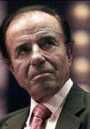 |
The former President of Argentina, Carlos Menem, was placed under house arrest yesterday as part of a probe into alleged arms trafficking. Carlos Saul Menem,Argentine politician, president from 1989 ; leader of the Peronist Justicialist Party. As president, he introduced sweeping privatization and cuts in public spending to address Argentina's economic crisis and stimulate the free market; released hundreds of political prisoners jailed under the Alfonsín regime; and sent two warships to the Gulf to assist the USA against Iraq in the 1992 Gulf War (the only Latin American country to offer support to the USA). He also improved relations with the UK. The son of Syrian immigrants to La Rioja province in the 1920s, Menem joined the Justicialist Party while training to be a lawyer. In 1963 he was elected president of the party in La Rioja and served as governor there 1973&endash;76 and 1983&endash;84. During 1976&endash;81, he was imprisoned during the military coup. In 1989 he defeated the Radical Civic Union Party candidate and became president of Argentina. Despite anti-British speeches during the election campaign, President Menem soon declared a wish to resume normal diplomatic relations with the UK and to discuss the future of the Falkland Islands in a spirit of compromise. He was re-elected in 1995. He was born in Anillaco, La Rioja Province. He was educated at Universidad de Córdoba, graduating in 1955. He founded the Juventud Peronista (Peronist youth organization) and in 1956 became legal adviser to the General Confederation of Labour. |
|
Bosnia and Hercegovina |
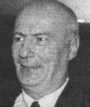 |
Jozo Krizanovic becomes chairman of the Presidency. A moderate Croat, Krizanovic takes the rotating chairmanship from Zivko Radisic, a Serb and a former ally of ousted Yugoslav president Slobodan Milosevic, for the next eight months. Beriz Belkic, a Muslim, is the third member of the joint presidency, set up under the Dayton peace accord which ended ending the 1992-95 war which tore the three communities apart. |
|
Shangai meet |
 |
Shanghai Five leaders meet All the member states of the five-country organization border Afghanistan, and want to keep the Taliban's particular form of Islam at arm's length in their own countries. Pakistan, also a neighbor of Afghanistan, wants to join the organization, but the summit is expected to reject the application. Member state Russia is particularly opposed, arguing that Pakistan provides military and financial assistance to the fundamentalist regime on the other side of the Kyber Pass. Russia, Kyrgyzstan, Kazakhstan, Tajikistan and China are the Shanghai Five. They teamed up initially as a Sino-Soviet diplomatic forum, emerging in post-Soviet days as a regional cooperative against drugs trafficking and terrorism. The leaders China, Russia and four Central Asian nations signed an agreement on promoting trade and combating Islamic militancy. |
|
Germany (Berlin) |
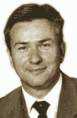 |
The Berlin state parliament removes Governing Mayor Eberhard Diepgen in a vote of no confidence and elects Klaus Wowereit as new governing mayor (89-78). Klaus Wowereit was born in Berlin on October 1,1953. Bacalaureate in 1973. State Exams, 1981 and 1984. 1984 -95 municipal councilor in Tempelhof district. Representative in SPD congress. Since December 1999 chairman of the SPD faction in Berlin. |
THIS WEEK'S STORY
12 June 1898
|
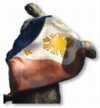
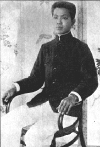
The Proclamation of Philippine Independence On June 12, between four and five in the afternoon, Aguinaldo, in the presence of a huge crowd, proclaimed the independence of the Philippines at Cavite el Viejo (Kawit). For the first time, the Philippine National Flag, made in Hongkong by Mrs. Marcela Agoncillo, assisted by Lorenza Agoncillo and Delfina Herboza, was officially hoisted and the Philippine National March played in public. The Act of the Declaration of Independence was prepared by Ambrosio Rianzares Bautista, who also read it. A passage in the Declaration reminds one of another passage in the American Declaration of Independence. The Philippine Declaration was signed by ninety-eight persons, among them an American army officer who witnessed the proclamation. The proclamation of Philippine independence was, however, promulgated on August 1 when many towns has already been organized under the riles laid down by the Dictatorial Government. Emilio Aguinaldo Emilio Aguinaldo y Famy was born into the local elite of Cavite on the Island of Luzon in the Philippines. His father had been mayor of Kawit (Cavite viejo) at the time of his death in 1878, a post Aguinaldo himself would hold in 1895. That same year Aguinaldo joined the secret, nationalist brotherhood Katipunan founded by Andrés Bonifacio. After the Philippines erupted in revolt against the Spaniards in 1896, Aguinaldo won several victories in Cavite Province. When Bonifacio came out of hiding in March 1897 and tried to reassert his leadership of Katipunan, Aguinaldo ordered his arrest, imprisonment, and eventual execution on May 10, 1897. Katipunan forces retreated into the mountains in the face of Spanish attacks. Ultimately he entered into an accord with the Spaniards, agreeing to exile in Hong Kong in exchange for 400,000 pesos. Soon after his arrival there, Aguinaldo purchased the weapons his troops would require to continue the struggle. .After the U.S. declared war on Spain, Aguinaldo saw a possibility that the Philippines might achieve its independence ; the U.S. hoped instead that Aguinaldo would lend his troops to its effort against Spain. He returned to Manila on May 19, 1898 and declared Philippine independence on June 12. When it became clear that the United States had no interest in the liberation of the islands, Aguinaldo's forces remained apart from U.S. troops. On January 1, 1899 following the meetings of a constitutional convention, Aguinaldo was proclaimed president of the Philippine Republic. Not surprisingly, the United States refused to recognize Aguinaldo's authority and on February 4, 1899 he declared war on the U.S. forces in the islands. After his capture on March 23, 1901, Aguinaldo agreed to swear allegiance to the United States, and then left public life. His dream of Philippine independence came true on July 4, 1946. He died in Manila in 1964. |

|


