
|
|
|
|
|
Transdniester (Moldova) |
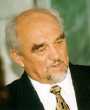 |
Presidential election. Results : Igor Nikolayevich Smirnov is reelected president of the breakaway Transdniester Republic, collecting more than 85% of the vote against 7.2% for Tom Zenovich and 4.8% for Aleksandr Radchenko. Turnout is over 64%. Profile : Born : 1941, Russia, Petropavlovsk-Kamchatskiy. Education : Zaporozhye Machine Construction Institute, Russia. Career : 1959-87 - Engineer, Chief Engineer, Chief of Shop, Dir. of Zaporozhye factory Elektromash. Member of the CPSU 1963-90. 1989-91 - Dir. of Tiraspol Joint Trade Union. 1990-91 - Chairman of Tiraspol City Executive Committee. 1990-92 - People's Deputy of Moldova (deprived of the authority by parliament), expelled from CPSU for separatism in 1990. 1991 - President of self-declared "Dniestrian Moldovan Republic" |
|
Gabon |
 |
Parliament 1st round. Results : Gabonese state media reports that early election results give the ruling Democratic Party of Gabon 56 of the 120 seats in parliament. A second round of voting is scheduled for the 23rd of this month |
|
Trinidad and Tobago |
 |
General election. Results : With nearly all votes from elections counted, preliminary results indicated 18 seats would go the party of Prime Minister Basdeo Panday and 18 to the opposition People's National Movement, setting the stage for a political struggle. |
|
Syria |
 |
The government resigns and President Bashar al-Assad asks Prime Minister Muhammad Mustafa Mero to form a new government. Profile : Mero, born in the Tal town near Damascus in 1941, served as governor of the northern city of Hassakeh and the southern city of Daraa. In all he served for 20 years as governor of the three cities. While in Hassakeh and Aleppo, which is the second largest Syrian city after Damascus, he was involved in talks with Turkish officials and was reported tn have maintained good ties with his Turkish counterparts despite periods of tense Syrian-Turkish relations. |
|
Saint Lucia |
 |
Sarah Lucy Flood-Beaubrun is sworn in as new home affairs minister. Profile : Born 8th January 1969 in St. Lucia. Education : Ave Maria Primary School. Castries Comprehensive Secondary School (1980 -1985). Sir Arthur Lewis Community College (1985-1987). South Thames College (UK) (1990-1991). University of Hull (UK) (1991-1994). University of Westminster (UK) (1994-1995). Qualifications : "A" Levels - Sociology, Economics, Literature, Law and Politics. Bachelor of Laws (LLB) (Upper Second Class Honors) University of Hull, United Kingdom. Admission : 27th July, 1995 - Called to the Bar of England and Wales - Member of the Honourable Society of Lincoln's. Inn September, 1995 - Called to the Bar of the QECS Supreme Court. work experience : 1987-1989 St. Joseph 's Convent Secondary School : Teacher - English Literature and English Language. 1989-1990 Caribbean Conference of Churches : Social Worker. Cornerstone Development Centre Youth Skills Training for young underprivileged persons : Assistant Facilitator July 1995-December 1995. Law firm of Cenac & Theodore : Barrister. 8th January 1996 Private Practice (Chambers). May 1997 Sworn in as St. Lucia's Minister for Health, Human Services, Family Affairs and Women. |
|
Guinea-Bissau |
 |
New government formed by Alamara Ntchia Nhassé appointed in 08 by the President Kumba Ialá after sacks Prime Minister Faustino Imbali. |
|
Malaysia |
 |
The raja of Perlis, Syed Sirajuddin ibni al-Marhum Syed Putra Jamalullail, is elected new yang di-pertuan agong of Malaysia. Profile : HRH Tuanku Syed Sirajuddin was born on May 17 1943 during the Japanese Occupation of Malaya. On October 30, 1960, he confered the title of Yang Teramat Mulia (later "Duli" was added) Raja Muda Perlis upon Tuanku Syed Sirajuddin. In the Throne Room of Istana Arau, His Royal Highness Tuanku Syed Sirajuddin Ibni Almarhum Tuanku Syed Putra Jamalullail was officially proclaimed the seventh Raja of Perlis on April 17 2000, one day after the death of his father on April 16. |
|
Syria |
 |
Syria's prime minister formed a new 33-member Cabinet Thursday charged with boosting the country's ailing economy. Mustafa Miro brought in 18 new ministers, canceled four ministries and added a new one in the Cabinet dominated by members of the ruling Baath party. The reshuffle is part of an effort by President Bashar Assad to press ahead with the social and economic reforms he promised Syrians after succeeding his father, the late President Hafez Assad, in July 2000. |
|
Yugoslavia (Kosovo) |
 |
Ibrahim Rugova fails to win enough support to be elected president of Kosovo in a first round of voting ; 49 deputies vote for him and 69 against. |
|
Tuvalu |
 |
Parliament elects Koloa Talake as new prime minister after Faimalaga Luka's government lost a no-confidence vote on December 7. Talake is sworn in on December 14. |
|
U.E. |
 |
The Laeken European Council This final summit of the Belgian presidency of the European Union is the one expected to set the agenda for the implementation of the Treaty of Nice on Jan. 1, 2005 and the next Inter-Governmental Conference before 2004. Pro-integrationist Belgium has expressed the wish that the meeting will result in an "ambitious Laerken Declaration." Controversial even at the wish-list level, the declaration builds on a German proposal to abolish the council of ministers and turn the European Commission into an executive body headed by a prime minister. The council would be replaced by a second chamber whose members, appointed by member states, would review parliamentary legislation. Any reforms made to the Nice Treaty, which governs how the 15-member European Union will grow into a 27-member body, have to overcome widespread distrust before they can come to pass: leaders have to be certain that any deals they do at the summit can be ratified at home. Opponents see the Belgian-German approach as opening the way for a two-speed Europe, in which the strongest and most like-minded integrationist countries forge ahead without being held back by doubters, stragglers or smaller, weaker or newer states. |
|
U.E. |
 |
A summit of EU leaders in Laeken, Brussels, agreed to set up a convention which will lead to a new governing treaty for the EU by 2004. It will be chaired by Valéry Giscard d'Estaing, the 75-year-old former president of France. He won despite reservations that his age made him the wrong person to conduct a debate over Europe's future. Profile : Born 1926. He completed his studies at the Ecole Polytechnique and the Ecole Nationale d'Administration, and joined the Inspection Générale des Finances in 1952, where he pursued an administrative career until 1956. Served as Deputy to the National Assembly 1956-1974. Secretary of State for Finance 1959- 1962. Minister of Finance and Economic Affairs 1962-1966, 1966-1974. Minister of Economy and Finance 1969-1974. President of France 1974-1981. Deputy to the National Assembly 1984-1989. Deputy to the European Parliament 1989-1993. Deputy to the National Assembly 1995-, . Chairman of the Foreign Affairs Committee, and Chairman of the Regional Council of Auvergne. |
THIS WEEK'S STORY
 |
This year, the Nobel Prize celebrates its 100th anniversary. In 1901, the first Prize Award Ceremony was held at what today is called the Old Royal Academy of Music in Stockholm. In Christiania (now Oslo), the names of the Nobel Laureates were announced in the Storting (Norwegian Parliament). To commemorate the centennial of these first Nobel Prizes, all now-living Laureates have been invited to participate in a Centennial Week in December. Beginning with lectures at various universities around Sweden and Norway, the week will culminate with the Nobel festivities on December 10 in Stockholm and Oslo. At this writing, some 225 Laureates have accepted the invitation, including more than 30 winners of the Peace Prize. |

|


